
As we age, we find it harder to recover from fatigue, it takes longer to recover after exercise, and we feel a decline in physical strength even when we are as active as before. Various physiological factors, including muscles, hormones, and immune function, are involved in these changes.
Among these, "mitochondria" are attracting attention as an important element in recent aging research.
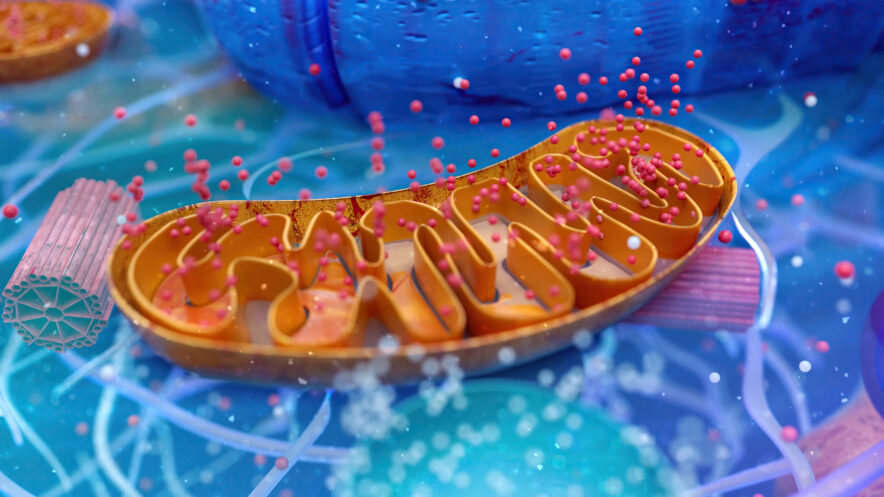
Mitochondria are known as intracellular organelles that produce energy for cellular activity. However, their role is not limited to simply supplying energy. They are also involved in regulating intracellular metabolism, oxidation-reduction reactions, stress responses, and signal transduction related to inflammation and cell death.
In longevity medicine, which aims to extend healthy life expectancy, understanding the function of mitochondria is an important perspective when considering the physical changes that occur with aging.
- What are mitochondria, which produce energy in cells?
- Why does mitochondrial function change with age?
- Oxidative stress and chronic inflammation—the aging chain involving mitochondria
- NAD⁺ and Sirtuins: Focusing on Molecules that Support Cellular Metabolism
- What we can do now to support mitochondrial function
- The future of longevity medicine: From "rejuvenation" to "maintaining adaptability"
- Considering healthy lifespan from the perspective of energy generation capacity.
What are mitochondria, which produce energy in cells?
The cells that make up our bodies constantly need energy to maintain life activities. Muscle movement, nerve transmission, cell repair, and immune cell function – the energy currency that supports these activities is ATP (adenosine triphosphate).
Mitochondria utilize energy obtained from nutrient metabolism to produce ATP through a mechanism called oxidative phosphorylation using oxygen. Mitochondrial function is particularly important in tissues with high energy demands, such as muscles, the heart, and the brain.
However, mitochondria are not simply power generators. They regulate energy production according to the state of the cell and are also involved in calcium regulation and signal transduction via metabolites. In other words, mitochondria are the link between cellular energy supply and functional regulation.
Why does mitochondrial function change with age?
Age-related changes in mitochondria cannot be explained simply by a decrease in energy production.
Mitochondria constantly divide and fuse within cells, repairing damaged areas and removing those with impaired function. This mechanism is called mitochondrial quality control.
One of its important functions is "mitophagy." This is a mechanism that selectively breaks down and removes damaged mitochondria, and is essential for maintaining a healthy intracellular environment. In addition, when combined with biosynthesis, which forms new mitochondria, cells respond to changes in energy demand.
However, research has shown that with age, a series of functions that detect, remove, and replace mitochondrial damage change. As a result, cells may lose their ability to flexibly respond to energy needs and recover after being stressed.
These changes are thought to affect multiple tissues, including muscle function, metabolism, and the immune system. However, mitochondrial dysfunction can sometimes be the cause of aging, while other age-related changes may also occur as a result. The relationship between the two should be understood as mutual, rather than one-way.
Oxidative stress and chronic inflammation—the aging chain involving mitochondria
Oxidative stress is also an important topic when considering the function of mitochondria.
During energy production, highly reactive molecules called reactive oxygen species (ROS) are also generated. If reactive oxygen species remain in excess, they can damage DNA, proteins, lipids, and other tissues. On the other hand, appropriate amounts of reactive oxygen species also function as signals that regulate adaptation to exercise and cellular defense responses.
Therefore, simply eliminating all reactive oxygen species is not the solution. What's important is the balance between the production of reactive oxygen species and the antioxidant defense mechanisms that control them.
Furthermore, components released from damaged mitochondria can activate intracellular inflammatory signals. The phenomenon of chronic, low-level inflammation that persists with age is called "inflammaging" and is an important research area in aging studies.
Mitochondrial dysfunction, impaired cellular quality control, and chronic inflammation are not independent problems. They may influence each other and be related to tissue function and the body's adaptability.
NAD⁺ and Sirtuins: Focusing on Molecules that Support Cellular Metabolism
Along with mitochondrial research, NAD⁺ (nicotinamide adenine dinucleotide) is also attracting attention.
NAD⁺ is a coenzyme involved in redox reactions within cells and is an important molecule that supports energy metabolism. It is also involved in the function of enzymes such as sirtuins and is involved in mechanisms related to cellular stress response, metabolic regulation, and DNA repair.
Age-related changes in NAD⁺ metabolism are being studied in relation to mitochondrial function and cell maintenance mechanisms. For this reason, research is also progressing on using NAD⁺ precursors such as NMN (nicotinamide mononucleotide) and NR (nicotinamide riboside) to influence NAD⁺ metabolism in the body.
Studies involving humans have reported that these precursors alter NAD⁺-related metabolic indicators. However, the effects on physical function, metabolism, and vascular function vary from study to study, and their long-term impact on healthy lifespan has not been established.
The fact that changes have been observed at the molecular level is different from whether aging actually slows down or lifespan is extended. Research on NAD⁺ is a promising area, but its clinical significance requires further verification.

What we can do now to support mitochondrial function
Exercise is currently the method for maintaining mitochondrial function that has been supported by relatively solid evidence from human studies.
Aerobic exercise and strength training
Aerobic exercises such as walking and cycling help improve the oxidative capacity and energy utilization efficiency of mitochondria in muscles. On the other hand, strength training helps maintain muscle mass and strength, and is important as a countermeasure against the decline in physical function that comes with aging.
Exercise-induced adaptation is not simply about increasing mitochondria. It's about the repeated process of receiving the stimulus of exercise and then recovering, which enhances the body's ability to cope with stress.
Sufficient nutrition and muscle maintenance
To support mitochondrial function, it's also important to consume the necessary nutrients, including energy and protein, in an appropriate amount.
Extreme dietary restrictions and excessive calorie restriction can lead to muscle loss and nutritional deficiencies. Especially for older adults, it's crucial to focus not only on weight loss but also on maintaining muscle mass and physical function.
Sleep and lifestyle rhythms
Sleep is a crucial element that supports physical recovery and metabolic regulation. Establishing a regular sleep-wake cycle and incorporating moderate physical activity during the day forms the foundation of a healthy lifestyle.
It's important to distinguish between the fact that improvements in exercise, nutrition, and sleep alter mitochondrial indicators and whether these alone have been proven to slow down aging itself. The idea that specific foods or supplements can rejuvenate mitochondria requires careful consideration.

The future of longevity medicine: From "rejuvenation" to "maintaining adaptability"
Advances in mitochondrial research are also bringing new perspectives to the question of how we should understand aging.
Until now, age-related changes have often been explained as a process of accumulating damage to cells and tissues. However, nowadays, the body's inherent mechanisms of maintenance, adaptation, and recovery, such as the ability to repair damage, remove unnecessary components, and adjust functions in response to environmental changes, are also being emphasized.
Mitochondria, too, are not simply meant to remain youthful. It's crucial that they can generate the necessary energy, sense the state of the cell, respond to damage, and recover from stress.
In the future, research is expected to comprehensively evaluate not only the number of mitochondria and specific metabolites, but also tissue-specific functions, quality control, stress response, and resilience. These indicators may lead to a more accurate understanding of changes in health status and physical function in the future.
However, at present, it has not been proven that specific interventions targeting mitochondria can generally slow aging or extend lifespan in healthy individuals. It is important to correctly understand the progress of research and distinguish between established knowledge and future expectations.
Considering healthy lifespan from the perspective of energy generation capacity.
Mitochondria not only supply energy to cells, but also support bodily functions through metabolism, stress response, and intracellular quality control. The changes in their function with age provide important clues to understanding the mechanisms of aging.
Longevity medicine aims not just to change the number of years old. It aims to extend the period during which individuals can live independently, maintain physical function, and support their quality of life.
Mitochondrial research is one of the important research areas for achieving this goal. Keeping an eye on the advancements in cutting-edge molecular research, while also improving daily lifestyle habits such as exercise, nutrition, and sleep, and understanding your own health based on scientific evidence—this will be a solid starting point for considering longevity in the future.







Comment