

Every year, with each birthday we turn, we get one year older.
However, it's not necessarily true that "if you're 50, your body is 50 years old" or "if you're 60, your body is 60 years old."
Even at the same age, some people remain youthful and active, while others suffer from lifestyle-related diseases and declining physical strength from an early age. If we consider not only appearance and physical strength, but also the state of blood vessels, muscles, brain, metabolism, and cells, our bodies do not necessarily age at the same rate.
Therefore, in recent years, the concept of "biological age" has been attracting attention in the fields of preventive medicine and longevity research.
Rather than using your registered age, this method estimates the actual degree of aging in your body based on data such as blood, DNA, proteins, and metabolites.
The question, "How old are you?" may no longer be answered simply by your date of birth.
In future health checkups, it may become commonplace to not only check "whether or not you have a disease," but also to check "how quickly your body is aging."
- What is the difference between chronological age and biological age?
- What is Age Clock, which measures aging using a "clock"?
- From "How old is my body?" to "How quickly is it aging?"
- Do exercise and lifestyle habits change your biological age?
- Combination with microRNA, blood tests, and imaging studies.
- From "health checkups to detect diseases" to "medical care to manage aging"
- The future that the word AGELESS represents
- Reference information
What is the difference between chronological age and biological age?
Actual age is a number that indicates how much time has passed since birth.
On the other hand, biological age attempts to estimate "how far aging has progressed" based on factors such as bodily functions, cellular state, and future disease risk.
For example, let's say there are two people who are both 50 years old.
One person exercises regularly to maintain muscle mass and pays attention to sleep and diet. Their blood pressure and blood sugar levels are stable, and they are not at risk of major lifestyle-related diseases.
The other person suffers from long-term lack of exercise and sleep deprivation, obesity, and chronic stress.
Naturally, it's unlikely that the two people are in the same physical condition.
Traditional health checkups have individually examined various items such as blood pressure, blood sugar levels, cholesterol, and liver function. However, research into biological age attempts to integrate these factors and evaluate them from a single perspective: "How much is your body aging right now?"
In recent years, advances in genome analysis technology, AI, and machine learning have led to rapid progress in research on "Age Clock," which estimates the state of aging from vast amounts of biological data.
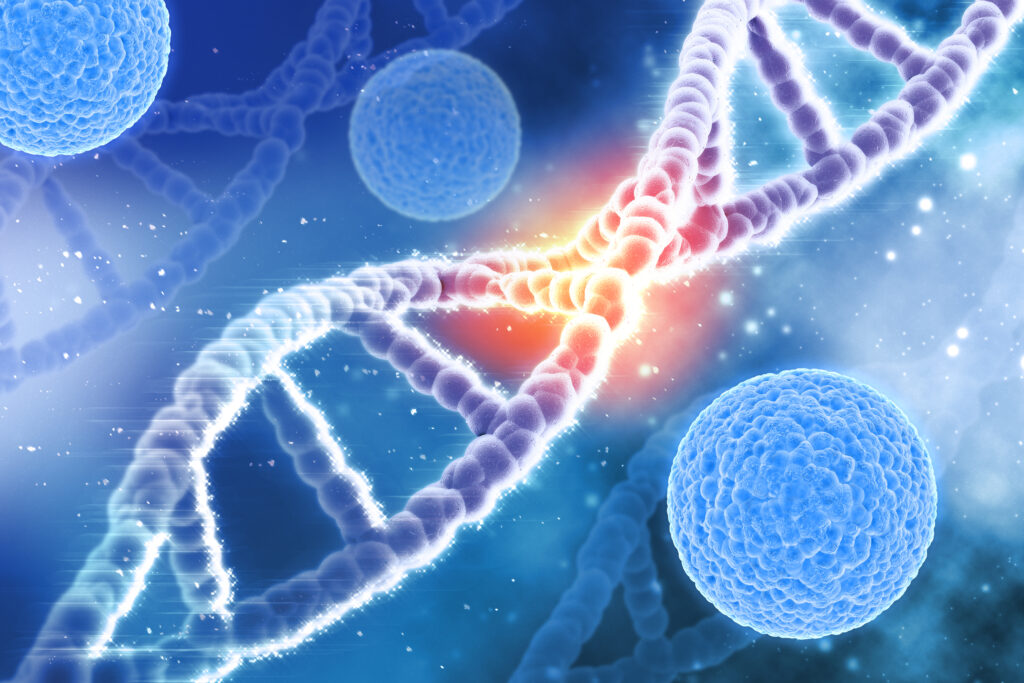
What is Age Clock, which measures aging using a "clock"?
Age Clock is a general term for a system that estimates age and the state of aging from various biological data of the body.
Typical examples include:
• Epigenetic clocks that utilize DNA methylation
• Proteomics clock that utilizes proteins in the blood
• Metabolomics clock for analyzing metabolites
• Transcriptomics clocks that utilize RNA and gene expression
These are some examples.
Among these, one of the most actively researched areas is the "epigenetic clock," which utilizes DNA methylation.
Even if the sequence of DNA itself remains fundamentally unchanged, a chemical change called "methylation" occurs in the DNA.
It is known that this DNA methylation pattern shows a certain trend with age, and by analyzing these changes from large amounts of data, it has become possible to estimate age.
One of the things that significantly advanced this research was Dr. Steve Horvath's "Horvath Clock," published in 2013.
Research has continued, and more advanced Age Clocks have been developed that not only predict chronological age but also assess its relationship to health status, disease risk, mortality risk, and the rate of aging.
Currently, there are also indicators with different purposes and characteristics, such as "GrimAge" and "DunedinPACE."
The important point is that we're not measuring "how old you look."
Age Clock aims to capture data on the changes occurring inside the body and visualize the state and rate of aging.
From "How old is my body?" to "How quickly is it aging?"
The study of biological age is interesting not just because of the simple number of "physical age."
More important is the perspective of "at what rate am I aging right now?"
Even if someone is 50 years old, their biological indicators may be estimated to be younger than their actual age, while others may be estimated to be older.
Furthermore, current research is also progressing with attempts to evaluate "the rate of aging itself."
This is a very important concept for preventive medicine.
This is because, rather than treating a disease after it has developed, it may be possible to consider lifestyle changes and medical interventions at a stage where the body's aging process is accelerating.
Up until now, health checkups have, in a sense, focused primarily on "finding abnormal values."
However, from now on,
"There's nothing wrong, but isn't the rate of aging faster than before?"
"If I continue my current lifestyle, will my future health risks increase?"
This perspective may become even more important.
To visualize the "pre-illness" state, which is between health and disease, at an earlier stage.
Age Clock is expected to be a technology that will support such future preventive medicine.

Do exercise and lifestyle habits change your biological age?
The question everyone is probably wondering about here is, "Can biological age be changed?"
Current research is studying the relationship between lifestyle factors such as exercise, diet, sleep, weight, smoking, and stress, and DNA methylation age.
A review of recent studies has also reported a link between high levels of physical activity and earlier biological age in certain DNA methylation clocks.
However, it's important to note that this isn't as simple as saying, "If you exercise, your biological age will definitely decrease by X years."
There are various types of age clocks, and even when measuring the same person, the results may differ depending on the clock used.
Furthermore, even if the values change due to exercise or diet, further research is needed to determine whether this truly leads to an extension of lifespan or prevention of disease.
Current science has not yet perfected a "magic test" that can completely quantify aging.
However, technology that attempts to capture aging as objective data is definitely advancing.
Therefore, it's important to view AgeClock not as a "test to prove rejuvenation," but as a new indicator for observing changes in one's body over the long term.
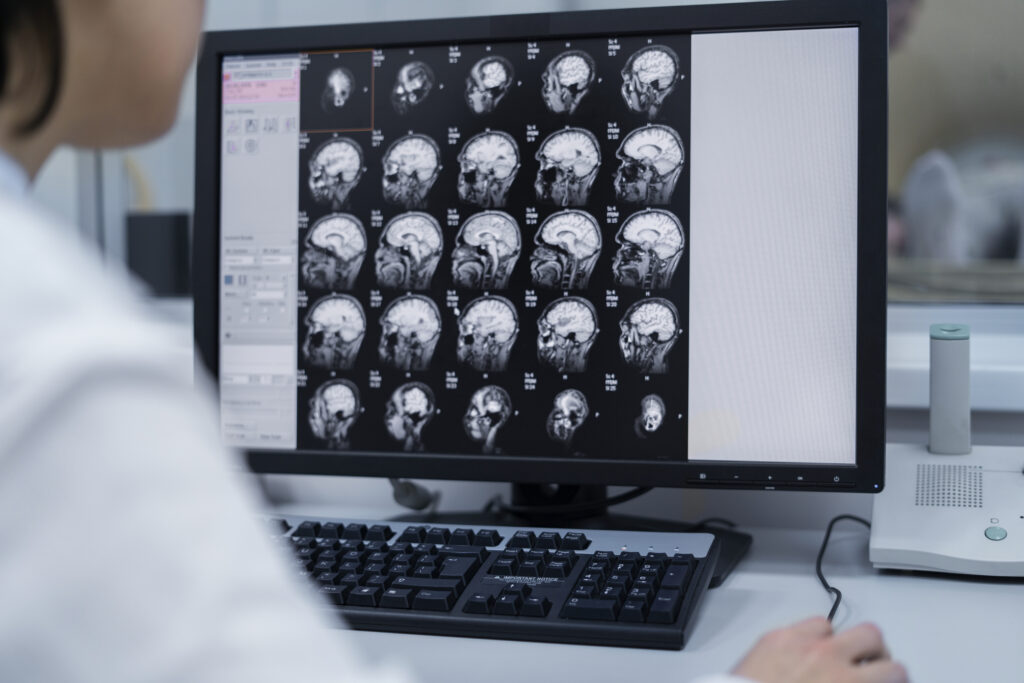
Combination with microRNA, blood tests, and imaging studies.
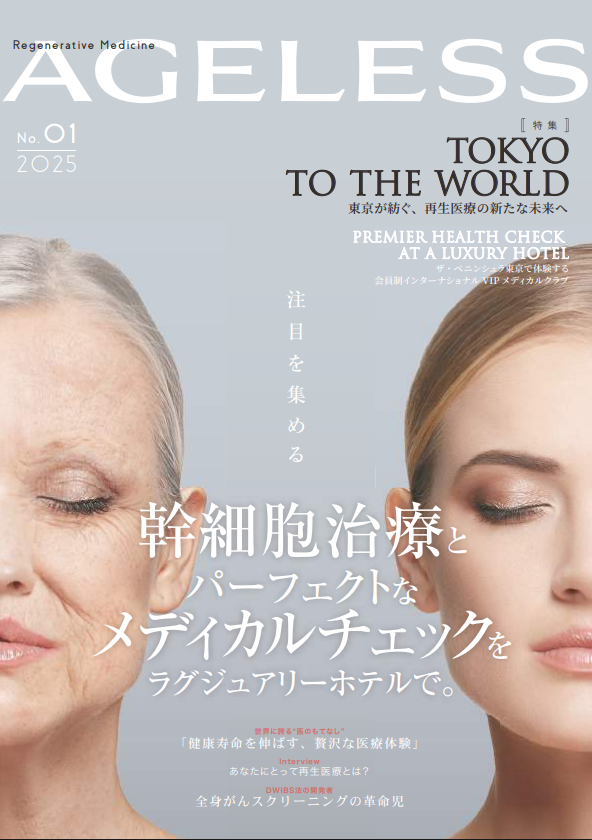
AGELESS has previously introduced microRNA-based testing and whole-body imaging diagnostics such as DWIBS.
These technologies and Age Clock are not in competition.
Rather, future preventive medicine will likely involve combining tests that each have different roles.
For example, molecular information such as microRNA can be used to identify changes occurring within the body and signs of disease risk.
Imaging diagnostics such as DWIBS allow us to confirm exactly where in the body changes are occurring.
Age Clock, on the other hand, takes a longer-term perspective to assess "how aging is progressing throughout the body as a whole."
Blood tests, diagnostic imaging, genetic and epigenetic analysis, wearable devices.
By integrating this information, health checkups could potentially evolve from an annual event into a more continuous form of "health management."
From "health checkups to detect diseases" to "medical care to manage aging"
Up until now, medicine has primarily developed around the detection and treatment of diseases.
Of course, that will never change.
However, in this era of 100-year lifespans, what we seek is not simply "longevity."
To live life to the fullest, moving, working, traveling, and enjoying life in my own way, for as long as possible.
To achieve this, we need an approach that goes beyond simply treating illnesses after they occur, and instead focuses on maintaining a body that is less susceptible to illness in the long term.
The key to this is "knowing where your body is currently located."
Everyone's actual age increases by one year at a time.
However, the biological aging process is not the same for everyone.
That is why, in future preventive medicine,
"I'm getting a health checkup because I'm [age]."
Rather than using age as the sole criterion,
"What state is my body in right now, and at what rate is it changing?"
It will be important to continuously monitor this.

The future that the word AGELESS represents
The word "AGELESS" does not mean "without age."
We all grow older.
However, getting older and losing your health are not the same thing.
And while we cannot change our actual age, we do have the option to choose how we maintain our health and physical function.
Research into age clocks is still in its early stages of development.
It is not possible to determine lifespan or future health solely based on test results, and challenges remain regarding measurement methods and interpretation.
Nevertheless, the very idea of "measuring aging" has the potential to significantly change the future of medicine.
In future health checkups, a simple "no abnormalities" result may no longer be sufficient.
No illness was found.
But how has my body changed compared to five years ago?
Are you able to maintain your muscle mass?
How are blood vessels changing?
Is aging not progressing at the cellular level?
And how quickly is my body aging right now?
The question isn't "How old will I live to be?", but "How old will I be able to stay healthy?".
In order to find the answer, we may need to re-examine the number "age" once again.
An ageless life is not about forgetting your age.
It's about understanding your own body, comprehending the changes it undergoes, and designing your own future health.
Age Clock aims to become a new kind of "clock" for that purpose.
Reference information
Epigenetic clocks, which utilize DNA methylation, are developing as a promising field of research for estimating biological age and health status. While various indices with different purposes have been developed, such as the Horvath Clock, PhenoAge, GrimAge, and DunedinPACE, challenges remain regarding measurement methods and clinical interpretation. Recent reviews also suggest that while epigenetic clocks have potential applications in preventive medicine and aging research, caution is currently needed when determining an individual's lifespan or health status based on the results of a single test.
Furthermore, a systematic review and meta-analysis of physical activity and DNA methylation age published in 2026 reported an association between high levels of physical activity and lower biological age as measured by some epigenetic clocks. However, many studies are observational, and further long-term studies and clinical trials are needed to definitively conclude that lifestyle directly alters the rate of aging.








Comment