


- As dogs age, what is the item on which annual spending is increasing the most?
- Next-generation anti-aging care: NMN (Nicotinamide Mononucleotide)”
- Green-lipped mussel is effective against osteoarthritis (bone arthritis), which is common in dogs.”
- The world's first "canine stem cell culture supernatant" has been created!
- In the popular "gut health" and "microbiome health" trends, are lactic acid bacteria also effective for dogs?
As dogs age, what is the item on which annual spending is increasing the most?
With the COVID-19 pandemic leading to a surge in time spent at home due to teleworking and other factors, many people are experiencing stress and anxiety, leading to a renewed demand for pets as a source of comfort and solace. Many people now welcome pets into their families, and a significant number feel that pets need health management just like humans. As a result, the market for pet supplements aimed at improving pets' quality of life (QOL) is expanding dramatically. Compared to the past, pet living environments have improved significantly, leading to longer average lifespans. With the increase in elderly pets, cases of illness and the need for long-term care are arising, highlighting the need for pet supplements. Pets are broadly divided into two main categories: dogs and cats. According to the pet ownership survey report published by the Japan Pet Food Association in December 2022, the latest pet ownership figures are reported as "dogs: 7.05 million" and "cats: 8.83 million." Although the number of dogs and cats is not significantly different, did you know that the annual expenditure on dogs and cats differs by more than double? Compared to cats, dog owners face increasing annual expenses in addition to costs for training, facilities like dog parks, and grooming (shampoo, cut, and trimming). Among these, the biggest increase is seen in dog supplements. This time, we will focus on this and interview Dr. Akio Yasukawa, a veterinarian who has shown deep affection and concern for animals for many years, and who has worked on the latest treatments to save the lives of many animals. He also serves as a director of the Tokyo Companion Animal Association and the chairman of the Japanese Society of Traditional Veterinary Medicine. We will discuss dog supplements that should be watched closely in the future.
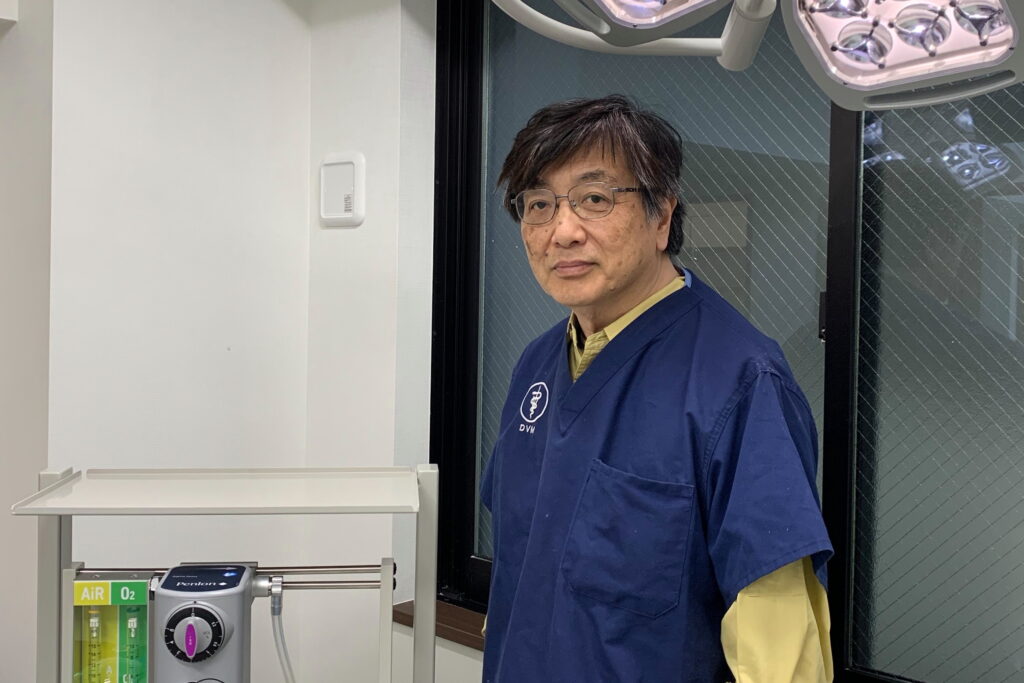
Veterinarian Akio Yasukawaprofile
He completed his graduate studies at the Tokyo Medical and Dental University Graduate School of Medical and Dental Sciences. He served as the director of Nishi-Ogikubo Animal Hospital and as an advisor to Kami-Ishigami Animal Hospital, and is now retired. He is the former representative director of the Japanese Society for Comparative and Integrative Medicine and a director of the Next Generation Absorption Research Association. Since opening his practice in 1982, he has saved the lives of many animals as a veterinarian, and has also traveled around the world visiting animal hospitals to introduce the latest treatment methods to Japan. He also served as the chairman of the Japanese Society of Traditional Veterinary Medicine, the predecessor of the Japanese Society for Comparative and Integrative Medicine.

Next-generation anti-aging care: NMN (Nicotinamide Mononucleotide)”
Not only humans, but also dogs are seeking rejuvenation at the genetic level, and the plant component "NMN (nicotinamide mononucleotide)" is now attracting attention from all over the world. Originally, NMN is like a vitamin that is found in the body, and it plays a role in assisting enzyme function and maintaining bodily functions. In foods, it is a component found in breast milk, broccoli, avocado, etc., and in the body it is produced using vitamin B3 (nicotinamide) as a raw material. Professor David A. Sinclair of Harvard University published research results on NMN in his book "LIFE SPAN - A World Without Aging", and the surprising result that became a hot topic was that when mice equivalent to 80 human years were given NMN for a certain period of time, they changed to the equivalent of 20 years old, regaining a quarter of their youth.
In Japan, following the Ministry of Health, Labour and Welfare's announcement on March 31, 2020, of revisions to the classification of food and drug substances, "NMN" was added to the "Non-Pharmaceutical List" and is now treated as a "food" rather than a "pharmaceutical," leading to an increase in its use domestically. We interviewed Dr. Yasukawa, who actually adopted this noteworthy "NMN" in clinical trials.
---What were your impressions of using "NMM" on a trial basis?
Veterinarian Yasukawa: I felt that age-related diseases were improving to such an extent that I wondered if it had a reducing effect. For example, it has been shown that even mature cataracts (mid-stage), which are said to be incurable, can be reversed. Regarding heart disease, in mitral valve insufficiency, the regurgitation of blood has decreased. And there has been a noticeable improvement in QOL (quality of life), such as coughing disappearing. This is thought to be because peripheral blood vessels are dilated. NMN activates sirtuin genes, which helps to prolong life and rejuvenate the body. I feel that it is an essential component for both humans and dogs.

Green-lipped mussel is effective against osteoarthritis (bone arthritis), which is common in dogs.”
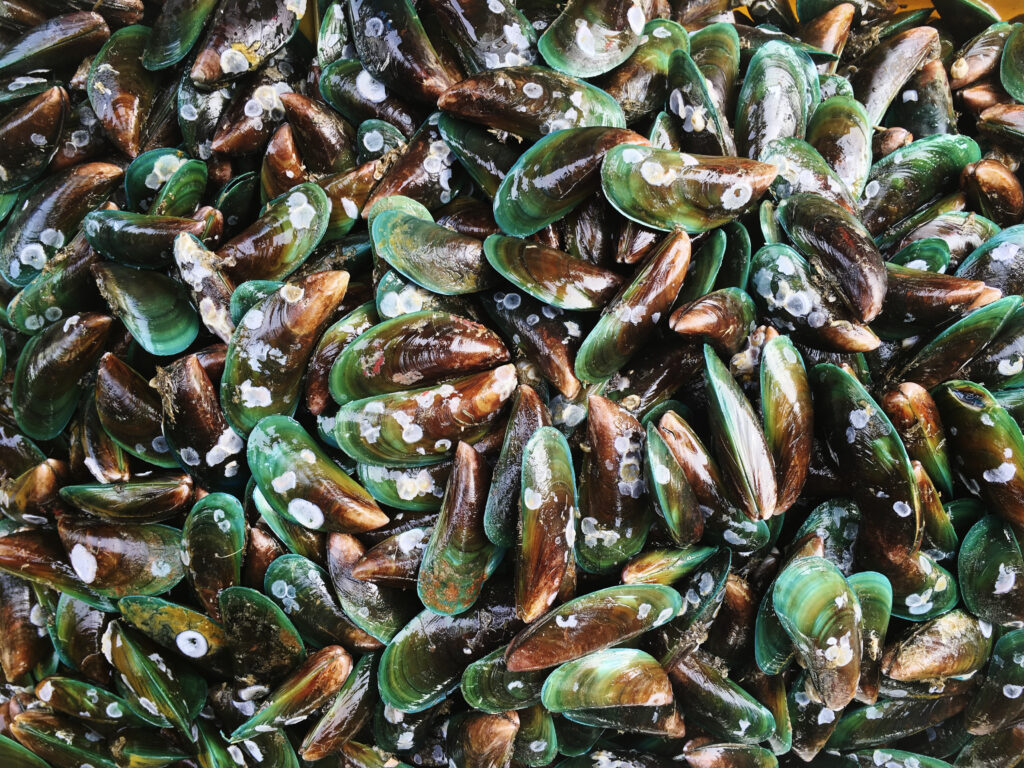
Compared to small breeds such as Toy Poodles, Chihuahuas, and Shiba Inus, which consistently rank high in popularity rankings, large breeds such as Golden Retrievers, Labrador Retrievers, and Bernese Mountain Dogs are considered to have a higher risk of developing arthritis. Furthermore, even small breeds are not immune to the risk of arthritis, as many are prone to congenital abnormalities such as patellar luxation (dislocation of the kneecap). Dogs with patellar luxation are more susceptible to strain on their knees, which can gradually develop into knee arthritis. To prevent this, it is essential to ensure your dog gets adequate exercise and manages its weight, but let's also look into the ingredient "green-lipped mussel," which is attracting attention for its anti-inflammatory effects.
---Anti-inflammatory effectDid you feel any effects from the "green-lipped mussel"?
Veterinarian Yasukawa: I have observed that the anti-inflammatory effects of omega-3 fatty acids, chondroitin sulfate, and glucosamine contained in green-lipped mussels have helped to alleviate pain in patients with osteoarthritis at an early stage.
Normally, walking in an awkward position due to pain can worsen inflammation and amplify pain, so it's desirable to suppress inflammation and reduce pain as early as possible. In all cases, improved overall circulation was observed. It can be said that the anti-inflammatory effects of the components contained in "green-lipped mussels" are important.

World's first "dogStem cell culture supernatant liquid”The birth of "!
In conventional regenerative medicine, the only effective method was considered to be the direct transplantation of stem cells themselves into the body's tissues. However, with the discovery of stem cell culture medium, it is expected that therapeutic effects equivalent to transplantation can be achieved, and it is certain that this will greatly contribute to future regenerative medicine. Recently, "human stem cell culture supernatant" has been used as an ingredient in cosmetics and is also being used in the treatment of various diseases.

"Human stem cell culture supernatant" refers to the liquid (supernatant) obtained by culturing mesenchymal stem cells, such as those found in dental pulp, umbilical cord, bone marrow, and fat cells, in the body, then extracting the stem cells from the culture medium and performing various treatments such as sterilization. It is said that administering this "human stem cell culture supernatant" into the body can have tremendous effects on "activating cells weakened by aging," "treating diseases," and "maintaining health."
While not yet widely used in veterinary hospitals nationwide for treating dogs and cats, it is a fact that it is becoming more practical. Research has progressed to determine whether canine stem cell culture supernatant would be better than human stem cell supernatant for use in dogs, leading to the creation of the world's first canine stem cell culture supernatant. Dr. Yasukawa was one of the first to incorporate canine stem cell culture supernatant into clinical trials. Let's hear his frank opinion on what contribution this new endeavor will bring to veterinary medicine in the future.
---What are the benefits of using canine stem cell culture supernatant?
Veterinarian Yasukawa: Stem cell culture supernatant has the effect of suppressing inflammation, especially allergies. The "canine stem cell culture supernatant" we tried this time showed exceptionally fast results. I would like to use it in combination with supplements such as "NMN" and "green-lipped mussel." In the case, joint pain and spinal pain have been relieved, which is thought to be because the inflammation has been strongly suppressed. When animals experience itching, they scratch and bite, which often spreads oral bacteria, namely Staphylococcus epidermidis and Staphylococcus aureus, and can induce other pathological conditions, so relieving the itching is paramount. The effect of suppressing histamine when itching occurs was very effective. It took less than 30 minutes to relieve the itching after use. It is thought that the anti-inflammatory effect occurs when stem cell culture supernatant is absorbed into the body. The number of cases will continue to increase, so we can expect great things from it in the future.

In the popular "gut health" and "microbiome health" trends, are lactic acid bacteria also effective for dogs?
In recent years, "gut health" and "microbiome health" have become popular topics. Both approaches to maintaining health start with improving the intestinal environment, and are similar in their philosophy, being essential for building good health and ultimately leading to a long and healthy life. As research into the gut microbiome progresses, it has become clear that the function of the intestines actually controls the physiology and diseases of various organs in the body, such as the brain, heart, kidneys, and skin.

The intestines are home to approximately 100 trillion diverse bacteria that live in a dense network of spaces. When viewed under a microscope, these bacteria resemble a flower garden (Flora), hence the name "intestinal flora." Maintaining an optimal balance of these bacteria is key to a healthy intestinal flora. The bacteria inhabiting the intestinal flora are broadly divided into three categories: "beneficial bacteria," "harmful bacteria," and "opportunistic bacteria." The ideal balance is considered to be "20% beneficial bacteria: 10% harmful bacteria: 70% opportunistic bacteria." For this reason, "lactic acid bacteria" are particularly noteworthy.
"Lactic acid bacteria" is a general term for bacteria that break down sugars such as carbohydrates and produce lactic acid. Lactic acid bacteria, which suppress harmful bacteria, are said to be effective in balancing the gut flora. Foods containing lactic acid bacteria include yogurt, cheese, and pickled vegetables, but recently, beverages, health foods, and supplements containing lactic acid bacteria have also become available, making them easily accessible to everyone. Lactic acid bacteria are attracting a lot of attention, and since the immune system of the body is the same for humans and animals, giving lactic acid bacteria to dogs, just like to humans, is said to be beneficial not only for regulating bowel movements but also for boosting immunity, and I hear that lactic acid bacteria supplements for pets have been selling like hotcakes in recent years. Finally, when I asked Dr. Yasukawa to conduct a clinical trial combining a supplement of live lactic acid bacteria with a gut microbiota test, he gave me a positive response, saying, "Let's definitely proceed with that. I think it will be very promising." In this era, the lifespan of beloved pets, who are like our own children, can be extended to a long and healthy life not only through the latest medical treatments but also by approaching it from all angles. "I want my beloved dog to live a long and healthy life forever." To achieve that wish, let's gradually learn what we can do now and what we need to know.






Comment