

- Plant-derived lactic acid bacteria are essential for "gut health" that improves the intestinal environment.”
- What is "ABM® Lactobacillus," a plant-derived lactic acid bacterium developed by the research institute?
- Differences between plant-derived lactic acid bacteria and animal-derived lactic acid bacteria
- Plant-derived lactic acid bacteria contribute to research on next-generation agriculture
- We have developed a new product: a chewable tablet containing plant-derived lactic acid bacteria.
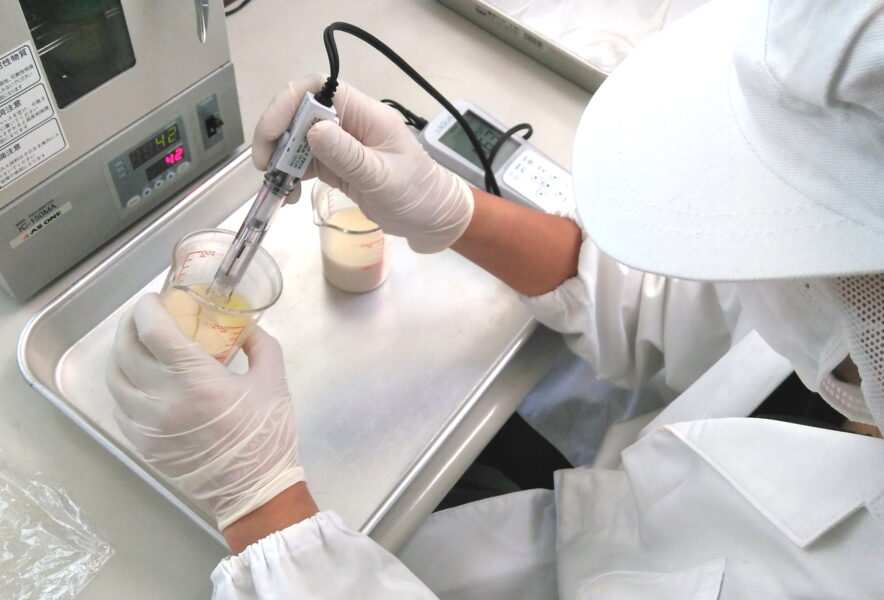
Plant-derived lactic acid bacteria are essential for "gut health" that improves the intestinal environment.”
In recent years, the term "gut health" has gained attention because improving the intestinal environment leads to improved immunity. There is growing expectation that plant-derived lactic acid bacteria, which are effective in improving the intestinal environment, will have an immune-activating effect. So, we spoke with Kota Uesaka, president of the Japan BBM Research Institute in Hyogo Prefecture, which has been researching live plant-derived lactic acid bacteria for over 30 years.

Profile of Kota Uesaka, President of BBM Research Institute Japan Co., Ltd.
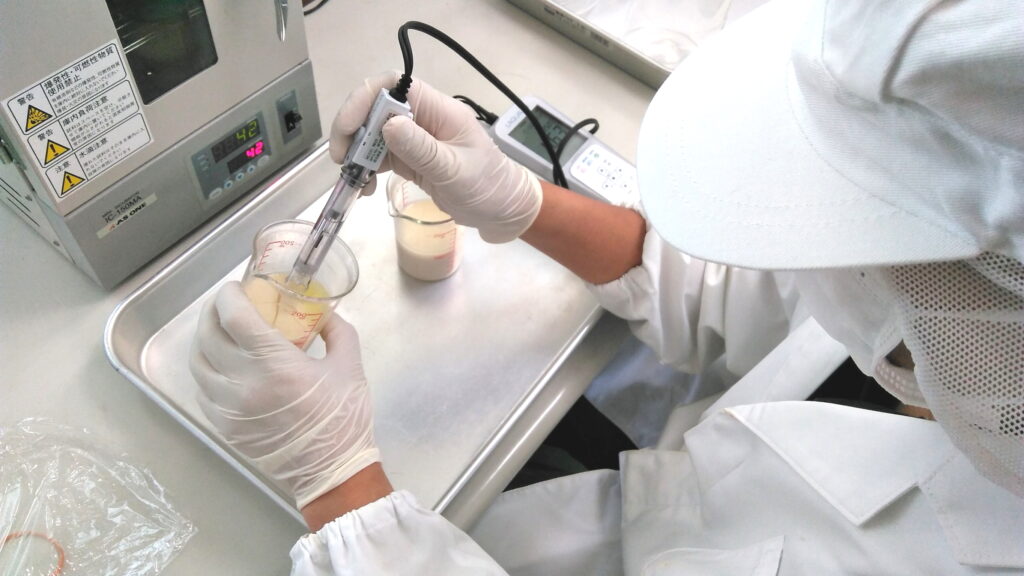
Inheriting his father's (a collaborator with Mie University) desire to help those suffering, he assumed his current position in November 2019. Passing the torch to his son, who completed a master's degree at the Tokyo University of Agriculture Graduate School of Bioinformatics, the company aims to create a better future for human health, spanning three generations. Founded in 2018, the Japan BBM Institute focuses on the themes of Botanical (plant-based), Bio (microorganism-based), and Medical (medical care), representing their goal and the origin of their company name. They believe that building a body that doesn't get sick is crucial, rather than simply treating symptoms. As a bio-venture, they have acquired evidence and patents demonstrating significant effects on various symptoms, including IgA antibodies, improved sleep quality, intestinal health, and the stratum corneum of the skin.
Japan BBM Institute
What is "ABM® Lactobacillus," a plant-derived lactic acid bacterium developed by the research institute?
Among the many types of lactic acid bacteria, "ABM® Lactobacillus," which the "Japan BBM Research Institute" has been continuously researching, is manufactured using a patented process and contains a precise balance of multiple plant-derived lactic acid bacteria that are beneficial to the human body and the environment. The synergistic effect of different bacteria is said to improve immunity and is highly regarded for its effectiveness in health issues such as diabetes and hay fever. Furthermore, in terms of the environment, "ABM® Lactobacillus" attracts small animals that feed on it in natural environments such as soil and oceans, creating a food chain that attracts larger animals that prey on them. This contributes to sustainable soil fertility and reduction of food waste, and is expected to have beneficial effects in various fields.
---Could you tell us about the history of the development of the plant-derived lactic acid bacteria "ABM® Lactobacillus"?
President Uesaka: About 30 years ago, at the Uesaka BBM Research Institute, which was founded in Osaka, we collaborated with Mie University to successfully improve the water quality of pearl oyster farming in Ise Bay, and that's how "BBM lactic acid bacteria" was born. This is the origin of "ABM® lactic acid bacteria," a plant-derived lactic acid bacterium that our company has been researching. "BBM" is an acronym for "Botanical," "Bio," and "Medical," and it conceptually represents our goal of promoting preventive medicine using plant-derived microorganisms. As a product name to achieve this goal, we named it "ABM®," which means "Able" (capable) microorganism. "ABM® lactic acid bacteria" is a raw material for lactic acid bacteria solution that blends four plant-derived lactic acid bacteria while they are still alive. Manufactured using a patented method obtained in July 2016, we specialize in soy milk, okara (soy pulp), and plant-derived materials, producing liquid lactic acid bacteria raw materials, as well as freeze-dried and pulverized lactic acid bacteria raw materials using a vacuum freeze-dryer. We produce a variety of food additive raw materials using these, as well as leafy vegetables and fruits containing live plant-derived lactic acid bacteria, which we supply and sell to hotels, department stores, and other retailers. We are also working on applications for animal feed and water quality improvement in aquaculture farms, and are conducting research in collaboration with universities to expand our business into the food, agriculture, livestock, and fisheries sectors. We will continue to develop lactic acid bacteria raw materials and various in-house products in the future.
Differences between plant-derived lactic acid bacteria and animal-derived lactic acid bacteria
---What are the differences between plant-derived lactic acid bacteria, animal-derived lactic acid bacteria, and "ABM® lactic acid bacteria"?
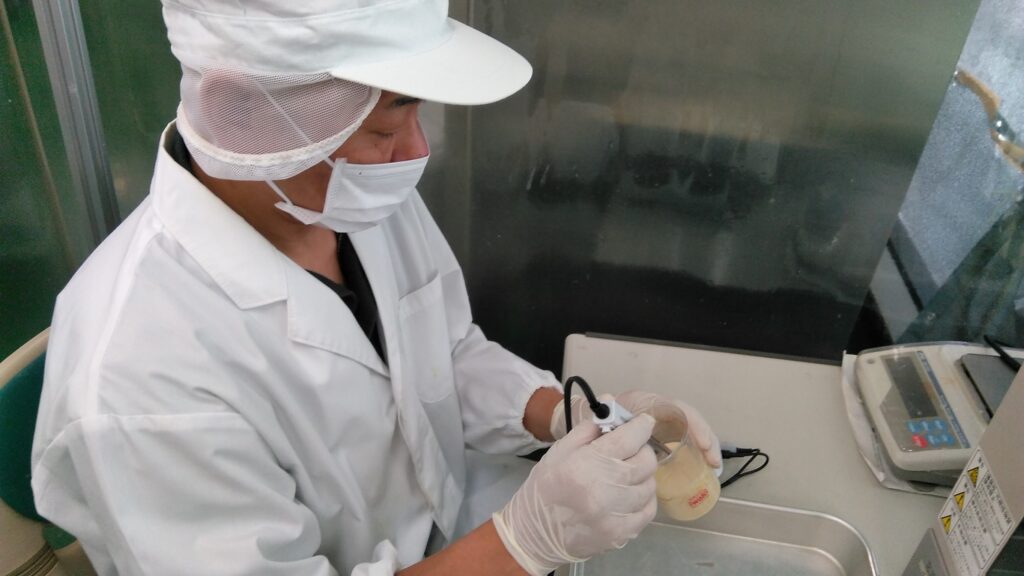
President Uesaka: Lactic acid bacteria can be derived from animals, such as those found in milk, cheese, and yogurt, or from plants, such as those found in fermented foods like pickles. However, the "ABM plant-derived live lactic acid bacteria" produced at our factory have a significant advantage: unlike animal-derived bacteria which are killed by oxygen in the air, stomach acid, and bile acid, and also by low salt concentrations as low as seawater, they are microaerophilic and do not die even when exposed to oxygen, stomach acid, bile acid, or high salt concentrations. On the other hand, typical lactic acid bacteria beverages and soft drinks use lactic acid bacteria that are classified as general bacteria, so they are sterilized prebiotic (dead bacteria) products. Even probiotic (live lactic acid bacteria) products made from animal-derived lactic acid bacteria are killed by oxygen in the air, stomach acid, and bile acid. Furthermore, many plant-derived lactic acid bacteria products currently on the market are produced using single strains of bacteria, resulting in limited effectiveness. This is where our "ABM plant-derived live lactic acid bacteria" differs significantly from those products.
Plant-derived lactic acid bacteria contribute to research on next-generation agriculture
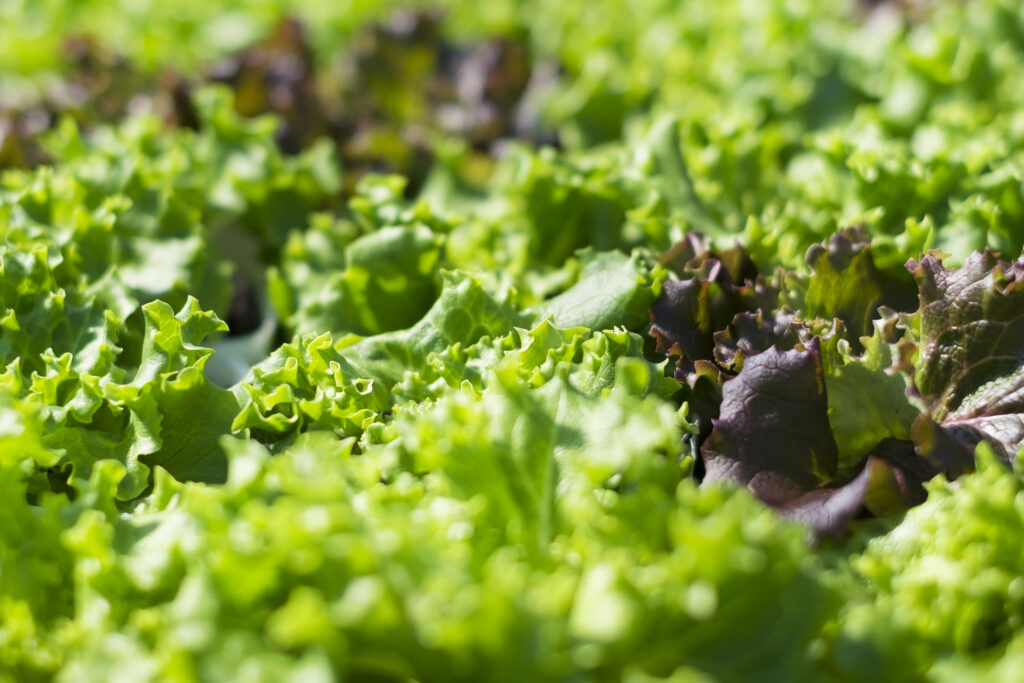
The research institute is developing products related to plant-derived lactic acid bacteria through collaborative research with various research institutions and partnerships with pharmaceutical and food companies. By providing these bacteria to plants, they promote growth, protect them from diseases, insects, and environmental stress, and can be used as a substitute for fertilizers and pesticides. The functions of plant-derived lactic acid bacteria are now making a significant contribution to next-generation agriculture research, and their activities are attracting attention.
---Please tell me about leafy vegetables containing plant-derived lactic acid bacteria.
President Uesaka: In 2014, our company was able to confirm, perhaps for the first time in the world, that plant-derived lactic acid bacteria could be found in the stems, leaves, and even fruits of plants, and we have successfully developed and implemented this technology. At the time, experts were saying things like, "That's impossible. Organic matter doesn't carry over into plants! Such a thing doesn't even exist anywhere in the world. There are no papers on it." However, that conventional wisdom has been overturned, and now the scope of research has expanded. Our company has succeeded in producing vegetables that have been introduced with lactic acid bacteria. These lactic acid bacteria have functions, and their greatest function is to improve immunity. By introducing lactic acid bacteria into vegetables, the shelf life is extended by 3 to 5 times, and cabbage remains crisp and perfectly fine even after 30 days of refrigeration. Research institutions that have learned of this fact are now studying why our lactic acid bacteria become endophytes (endogenous) in plants. We look forward to seeing their findings published in a paper in the future. Our mission is not to treat symptoms, but to contribute to building bodies that are resistant to illness, and we believe it is important to help improve the health and well-being of all people.
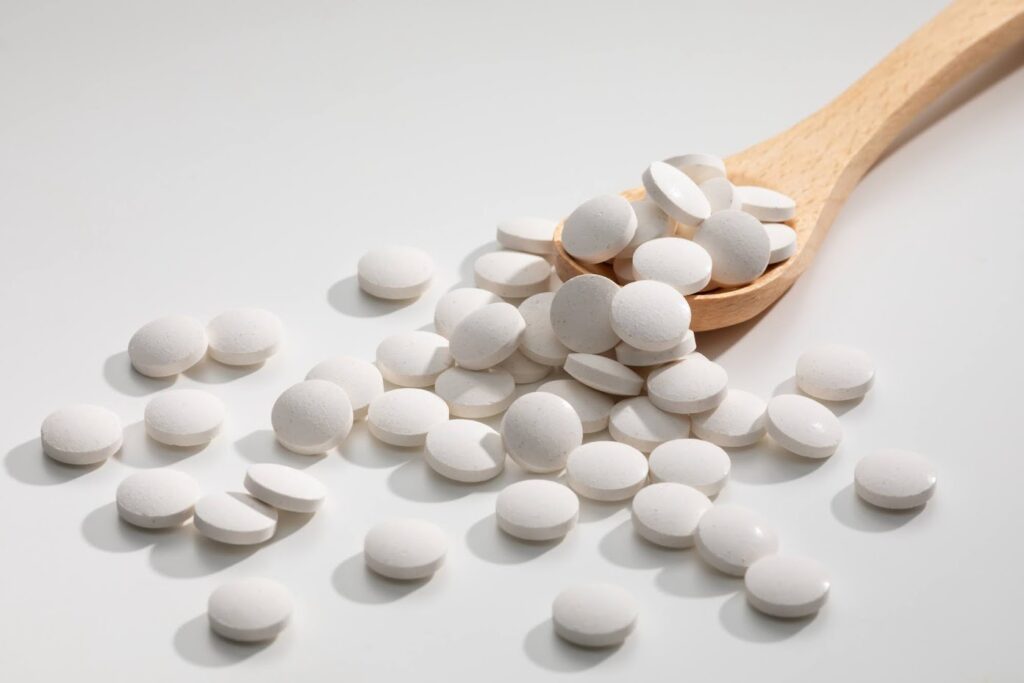
We have developed a new product: a chewable tablet containing plant-derived lactic acid bacteria.
As a new initiative, we have successfully developed a chewable lactic acid bacteria tablet in collaboration with a pharmaceutical company, so that anyone can easily incorporate live lactic acid bacteria into their diet.
---Could you tell us about any difficulties you encountered during development?
President Uesaka: When developing the chewable tablets, there's a saying, "Good medicine tastes bitter," but in modern times, it's difficult for good medicine to become popular unless it tastes good. Therefore, we couldn't compromise on the taste. We had a lot of trouble developing the technology to maintain live bacteria in powder form, but we successfully completed the product, and according to surveys conducted during monitor trials over several months, its effectiveness has been confirmed. By making it a chewable tablet that is easy to store, carry, and take, we hope that many people will be able to easily get their hands on plant-derived live lactic acid bacteria.






Comment