

Detecting cancer early is an eternal challenge in medicine and a critical turning point that can determine a patient's life. The earlier it is detected, the more treatment options become available, and the brighter the path to recovery. However, to make "early detection" a reality, we need patient-friendly, accurate, and safe testing methods.
The technology that has been attracting attention in recent years is "DWIBS (Deep Wisdom Breathing and Surgery)," which aims to come as close as possible to that ideal. Dr. Taro Takahara (Visiting Professor at Akita University), the developer of the technology and a leading expert in radiology, says the following:
"Cancer is meaningless unless it's detected 'before symptoms appear.' DWIBS is a technology created for that purpose. It's painless and radiation-free. We believe it's a future-oriented whole-body cancer screening that can be received with peace of mind."
Taro Takahara
Doctor of Medicine, Board Certified Radiologist
Visiting Professor, Akita University
Former Professor, Department of Biomedical Engineering, Faculty of Engineering, Tokai University
He devised the whole-body MRI "DWIBS method," successfully achieving the world's first visualization of peripheral nerves, which was published in the medical journal "NEJM."
Completed training at the Department of Pediatrics, Keio University School of Medicine, and the Department of Radiology, Dokkyo Medical University. Became a radiologist at St. Marianna University School of Medicine.
He previously served as an assistant in the Department of Radiology at Kyorin University School of Medicine, a lecturer in Diagnostic Imaging at Tokai University School of Medicine, and a visiting associate professor in the Department of Radiology at Utrecht University Hospital in the Netherlands, before becoming a professor at Tokai University. He graduated from Akita University School of Medicine.
[Specialties] Radiology, MRI, Diffusion-weighted imaging/DWIBS
[Book]
2003: A Guide to Medical 3D Imaging: Concepts and Processing Methods
MRI Preparation Exercises (2000): Pocket Edition: The First Step to a Healthy Experience
1999 MRI freedom
And many others
[Career History]
After graduating from Akita University School of Medicine, he worked as a radiologist and published a textbook on MRI (MRI Made Easy). In 2004, he gained attention for devising the whole-body MRI (DWIBS method) and was invited to Utrecht University in the Netherlands. His original research papers have been cited more than 1000 times. He worked for four years as a regular staff member and visiting associate professor of ultra-high field (7 Tesla) MRI. In 2009, he succeeded in the world's first whole-body MR-neurography imaging, which was published in the New England Journal of Medicine.
He returned to Japan in 2010 and has held his current position ever since. In recent years, he has devised a "painless MRI breast cancer screening" (DWIBS Search) using the DWIBS method and founded a venture company.
- What is DWIBS, the technology that "visualizes" invisible cancers?
- Why is DWIBS called the "ideal cancer test"?
- Shedding light on "silent cancers" that were difficult to detect with conventional tests.
- The testing process and cases in which testing is not possible.
- My mission as a physician and researcher
- "Now, more than ever, when nothing is happening, it's a test you should know about."
What is DWIBS, the technology that "visualizes" invisible cancers?
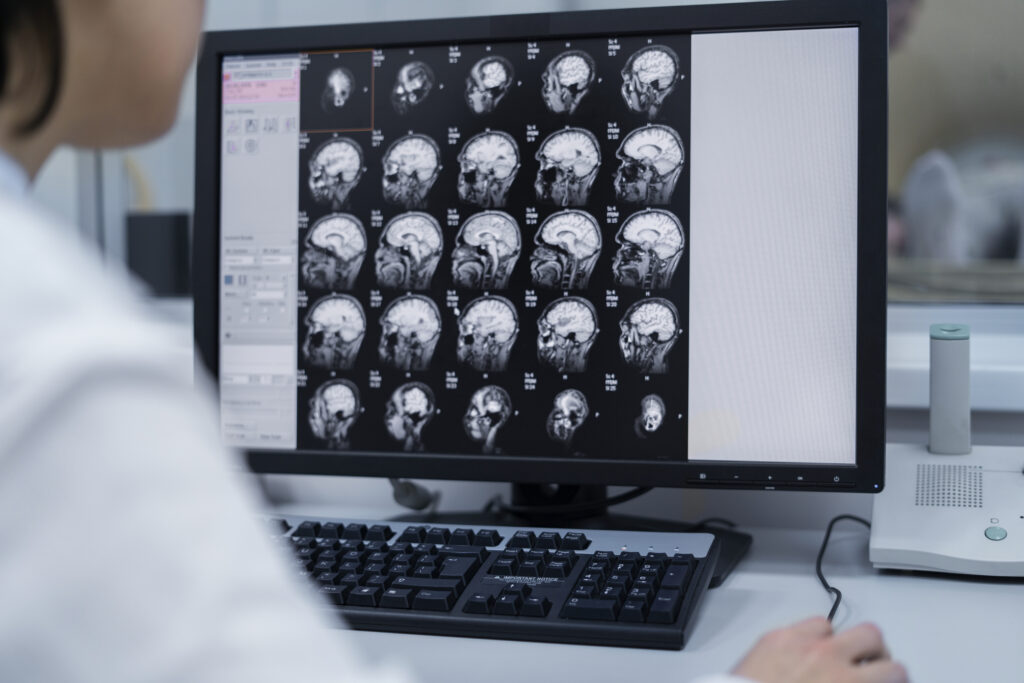
DWIBS stands for "Diffusion-Weighted Whole-Body Imaging with Background Body Signal Suppression," which literally translates to "diffusion-weighted whole-body imaging with background signal suppression." It is a type of MRI, but unlike conventional MRI, it was developed from a completely new perspective, focusing on capturing the "abnormal movement of water" in cancer cells.
Cancer cells have the characteristic of having restricted movement of water molecules compared to their surroundings. DWIBS can image this "restricted diffusion" with high precision, making it possible to detect small cancers that are easily missed in conventional examinations, as well as early signs of metastasis.
"Traditional imaging tests relied on 'shape' and 'density' for assessment. However, DWIBS observes 'movement.' This is a completely new approach that gets to the heart of cancer."
When this technology was first developed in 2004, it was not yet widely recognized in the Japanese medical community. However, its innovative nature caught the attention of Utrecht University Hospital in the Netherlands, and Dr. Takahara was invited to work there. There, he further refined the technology and succeeded in the world's first "MRI visualization of the entire peripheral nerve system." This achievement was published in the prestigious medical journal, the New England Journal of Medicine.
Why is DWIBS called the "ideal cancer test"?
What sets DWIBS apart from other cancer screenings is its "ease of use" and "comprehensiveness."
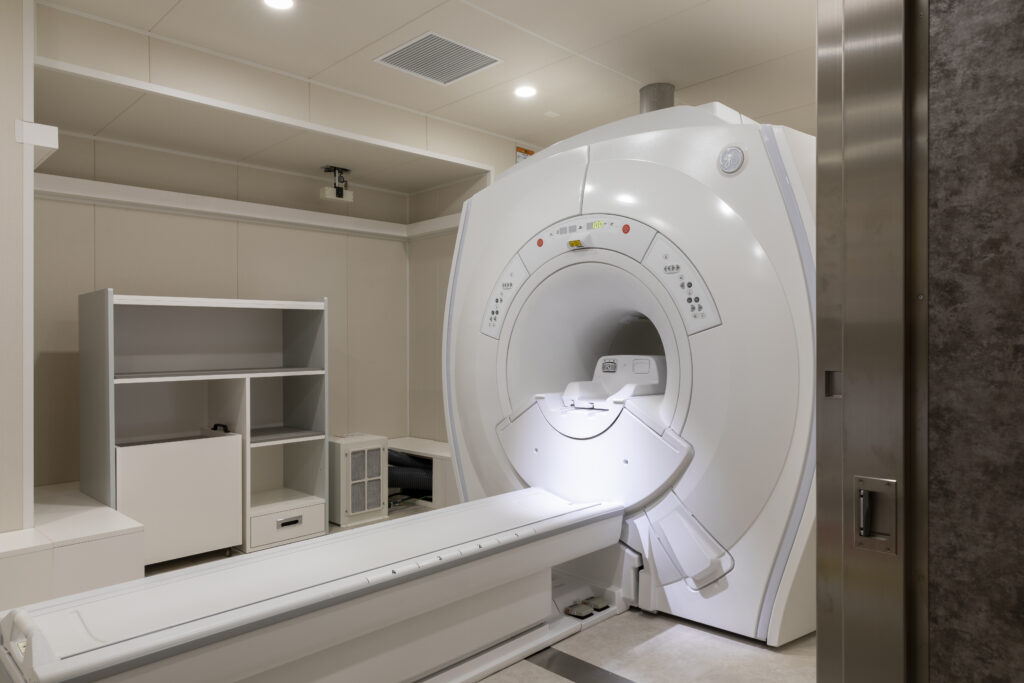
First, DWIBS does not use any radiation. Unlike CT scans and PET-CT scans, which use X-rays or radioactive materials, DWIBS uses only magnetism and radio waves for imaging, so there is no risk of radiation exposure, and repeated examinations are possible. Even when high-risk individuals undergo regular checkups, there is virtually no burden on the body.
Furthermore, DWIBS can scan the entire body in a single examination. Because it can comprehensively image every part of the body—head, chest, abdomen, pelvis, and limbs—it can check at once whether cancer is lurking anywhere in the body, without having to pinpoint the location of the cancer.
"Because we don't know where the cancer is located, it's necessary to take a holistic approach to examining the whole body. DWIBS has the potential to detect cancers in unexpected locations."
In addition, DWIBS is painless and causes no discomfort. Because it involves no injections, no camera insertion, and no invasive procedures, the stress of undergoing the examination is extremely low, and the test is completed in about 30 minutes to an hour. You can immediately return to your daily life afterward, and there is no need for hospitalization.
Shedding light on "silent cancers" that were difficult to detect with conventional tests.
DWIBS, which can be used for a variety of cancers including breast cancer, lung cancer, liver cancer, and prostate cancer, is particularly effective for cancers that are difficult to detect and metastatic cancers that are easily overlooked.
For example, mammography can be ineffective in Japanese women with dense breast tissue. Also, DWIBS may be able to detect small cancers that are difficult to detect with PET-CT.
"I devised DWIBS because I wanted to do something about 'cancers that are overlooked.' In particular, I wanted to deliver DWIBS to people who have no symptoms."
In recent years, Dr. Takahara has devised a "painless breast cancer screening" (commonly known as DWIBS Search) that applies this DWIBS technology. He is working to reduce the physical burden on women while aiming to detect early-stage breast cancer.
The testing process and cases in which testing is not possible.
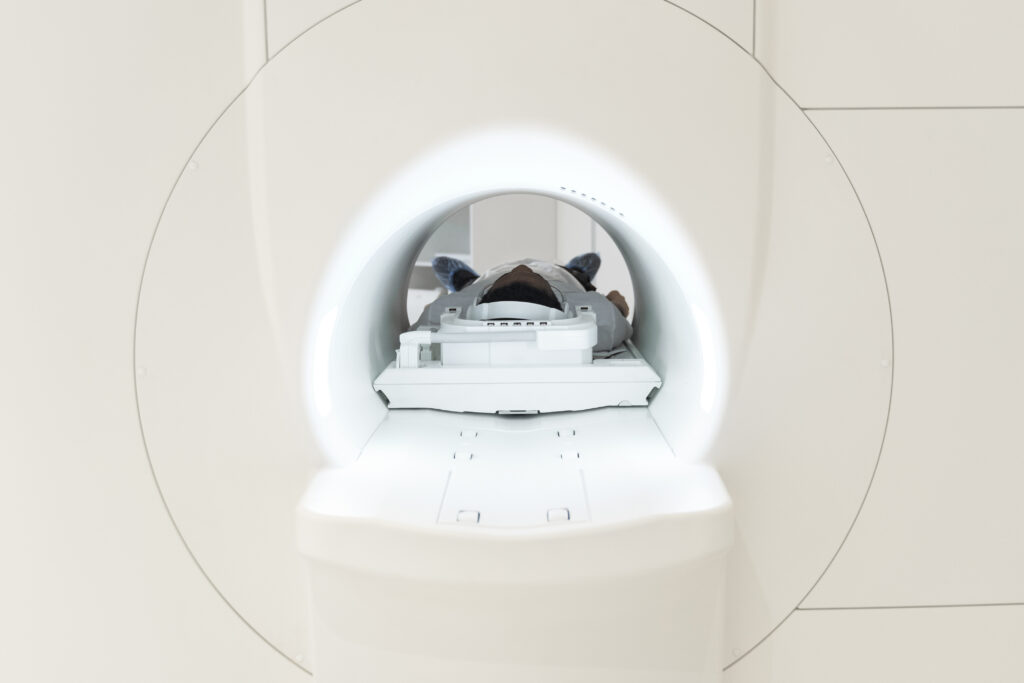
DWIBS testing requires no prior dietary restrictions, and the test itself is completed in a relatively short time. While there are precautions similar to those for MRI, it is a relatively low-stress test for most people, except for those with claustrophobia or metal implants.
"To ensure that even those unfamiliar with MRI scans can undergo the procedure with peace of mind, various measures are taken in medical settings, such as playing music and implementing measures to mitigate the effects of being in a confined space."
My mission as a physician and researcher
Although DWIBS is a technology originating in Japan, it was first recognized overseas and is now being adopted domestically through a process of reverse importation. Behind this lies Dr. Takahara's desire to "save the person in front of him" and his strong passion to "spread the mechanism for early cancer detection to the world."
"To reduce the number of people who lose their lives to cancer, I want to take action not only as a doctor, but also as a testing technician, entrepreneur, and advocate. That is my mission for DWIBS."
DWIBS testing is currently being implemented in some advanced clinics and medical institutions. In the future, as insurance coverage and integration into public systems progress, more people will likely be able to receive this test.
"Now, more than ever, when nothing is happening, it's a test you should know about."
Prepare one step ahead, even before you feel something is wrong with your body. DWIBS is a "future-oriented cancer screening" that is especially necessary for modern people. To protect your health and to fight against cancer, why not start by learning about DWIBS, a new option?







Comment