
Cancer, once synonymous with "incurable disease," is now transforming into something to "coexist with and overcome." For busy executives and those prioritizing quality of life (QOL), the severe side effects of conventional chemotherapy and highly invasive surgery posed significant risks that disrupted their careers and lives.
Currently, the world is paying close attention to **viral therapy** as a "fourth treatment" that minimizes risks while effectively targeting cancer. In December 2025, Oncolys BioPharma, a bio-venture company spun off from Okayama University, applied to the Ministry of Health, Labour and Welfare for manufacturing and marketing approval of Telomelysin (generic name: teserpatulev), a viral drug targeting esophageal cancer.
What path has this innovative Japanese technology taken, and how is it poised to change our future?
1. The evolution towards "intellectual treatment" and the tenacity of Japanese academia
The concept of viral therapy itself can be traced back to anecdotal reports in the early 20th century of cancer shrinking after viral infection, as well as early research in Eastern European countries, including the former Soviet Union (Russia). However, the technology at the time could not fully control the behavior of the virus, and it did not become an established treatment.
The research team led by Professor Toshiyoshi Fujiwara of Okayama University has transformed that unfinished concept into an **"highly precise, intelligent system"** using the most advanced genetic engineering techniques of the modern era.
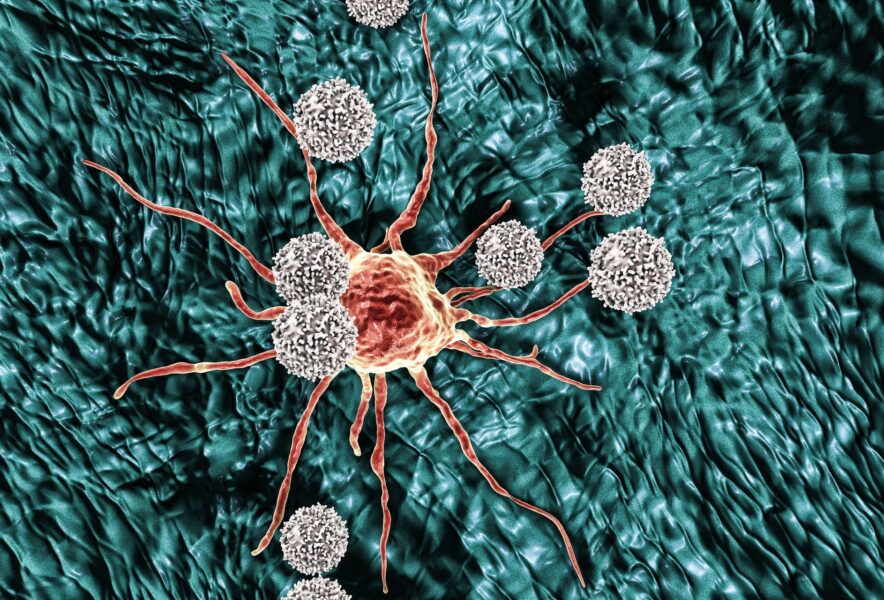
The "Telomelysin" they developed is created by incorporating a special genetic switch into the adenovirus, the virus that causes the common cold. This switch only activates in response to the enzyme "telomerase," which is specifically expressed in cancer cells. In other words, it remains dormant in normal cells, but proliferates explosively only when it invades cancer cells, causing the cells to break down from the inside.
The unconventional idea of "curing cancer with viruses," which originated in Russia and other countries, has finally reached the stage of becoming a sophisticated "pharmaceutical" thanks to meticulous research and technological innovation in Japanese academia.
2. The overwhelming evidence presented by Okayama University
The core of the application for approval in December 2025 was the results of clinical trials for "esophageal cancer in elderly patients for whom radiation therapy is difficult or surgery is not an option."
Treatment for esophageal cancer has traditionally involved procedures that place a heavy burden on the patient's body, such as esophageal removal and intensive chemoradiotherapy. However, treatment using telomelysin involves injecting the virus directly into the cancerous area using an endoscope, a method that minimizes the burden on the body.
In clinical trials, the combination of radiation therapy and telomelysin yielded remarkable results, with **complete remission** in approximately half of the patients. Moreover, serious side effects such as hair loss and severe vomiting were rarely reported. This makes it an ideal option for patients who wish to overcome their illness while maintaining their bodily functions.
3. "Double Effect": The power of the autoimmune system triggered by viruses
The true value of Telomelysin lies not only in its direct breakdown of cancer cells by the virus, but also in the fact that the "cancer markers (antigens)" released when cancer cells break down reactivate the patient's own immune system.
In essence, the site where the virus attacks cancer becomes the very "site for the body's own cancer vaccine production." This allows the activated immune cells to attack not only the direct site where the virus was injected, but also the microscopic, invisible metastatic cancer cells scattered throughout the body.
In recent years, it has been expected to work exceptionally well with "immune checkpoint inhibitors," which have become the mainstream treatment for cancer, and it is anticipated that its application will be expanded to even more types of cancer through future combination therapies.
4. A "New Dimension" in Cancer Treatment in 2026 and the Future We Will Have
With the application submitted at the end of 2025, Telomelysin is expected to reach general clinical practice as early as 2026. However, this is only the beginning. Cancer treatment will evolve to a level of personalization and sophistication beyond our imagination.
① From "targeting cancer" to "re-educating the whole body"
In the future, viral therapy will not be limited to a single treatment. We are entering an era of "fully personalized medicine" where AI analyzes the genetic sequence of each patient's cancer cells and designs and administers a virus optimized for that individual. Once the virus destroys the cancer, that information will be permanently stored in the body's immune system, playing a role as the "ultimate preventative measure" that will prevent future recurrence.
② "Smart coexistence" that does not impair quality of life
The very concept of "being hospitalized and suffering to get better" will become a thing of the past. Sophisticated, intelligent viruses will be administered on an outpatient basis, or with an extremely short stay, allowing patients to return to business and social settings the very next day. Such "smart treatments" will become commonplace. Not only will cancer be attacked, but by combining it with regenerative medicine that activates normal cells, it will no longer be a pipe dream to regain even higher performance than before treatment.
③ Japan leads the world in the "bio-renaissance"
The approval of Telomelysin from Okayama University in Japan, ahead of the rest of the world, symbolizes Japan's return to the top of the world in biotechnology. In the future, this Japanese-developed viral therapy is expected to pave the way not only for esophageal cancer, but also for pancreatic cancer, lung cancer, and even intractable brain tumors.
We now stand at a historical turning point, transforming cancer from a "hardship to be overcome" to a "controllable state through science and harmony." Okayama University's long-standing dedication to "correctly guiding the power of viruses" will culminate in 2026 as "the greatest wisdom" for all people to live authentically, healthily, and proudly.





Comment