

"Why does that person look so much younger, even though we're the same age?"
As I get older, I sometimes find myself wondering about such things.
Even among people who are the same age of 50, some have plenty of energy, firm skin, and don't get tired easily, while others feel older than their actual age.
Until now, these differences have often been explained using terms like "genetics" or "lifestyle."
However, in recent years, research in life sciences has been progressing to understand these differences from a level even closer to the cellular level.
One of the key terms is "microRNA".
microRNAs are tiny RNA molecules consisting of only about 20 base pairs, but they play a crucial role in regulating gene function.
In other words, it's not about changing the DNA "blueprint" itself, but rather about adjusting "which parts of that blueprint are used, when, and to what extent."
Currently, there is growing interest in the fact that microRNA expression patterns change with age, and that the state of microRNAs may also change due to environmental factors such as exercise and diet.
So, are the "messages" of microRNA different in young, healthy people compared to those who are not?

Exercise tells cells to "become stronger."
When you exercise, your muscles don't just get tired.
In muscle cells, various reactions such as energy metabolism, mitochondria, inflammation, repair, and regeneration begin to occur simultaneously.
microRNAs are also involved in that process.
MicroRNAs, particularly those found in abundance in muscles, include one called "myomiR," which is involved in muscle formation, maintenance, and regeneration.
What's interesting is the relationship between sarcopenia, the age-related muscle loss, and microRNA.
A review published in 2026 summarized that age-related changes in microRNAs are associated with multiple processes related to muscle aging, including muscle regeneration capacity, mitochondrial function, chronic inflammation, and fibrosis.
Furthermore, it has been shown that these microRNA abnormalities may be partially altered by interventions such as exercise, dietary restrictions, and intermittent fasting.
In other words, exercise is not simply "an act of burning calories."
When muscles are moved, various kinds of information are generated within the cells, which then influence the function of genes and the state of metabolism.
Exercise can be thought of as a kind of "message to the cells" of the body.
A study reported in 2026 showed that in older adults with regular exercise habits, some age-related molecular changes are suppressed, and a molecular profile closer to that of younger people is maintained.
Of course, we're not at the stage where we can rejuvenate ourselves by manipulating microRNAs through exercise.
However, the idea that physical activity also affects aging at the cellular level will become increasingly important in the future.

Sleep is a time for cells to "repair themselves".
The next important thing is sleep.
We tend to think of sleep as "a time to rest the body."
However, from a cellular perspective, sleep is not simply rest.
This is a time when various processes necessary for maintaining the body take place, such as responding to metabolic and oxidative stress that occurred during the day, regulating immune function, and restoring the nervous system.
If you continue to be sleep-deprived, these regulatory functions will be strained.
Furthermore, research is progressing on the relationship between sleep and microRNA.
microRNAs not only regulate gene expression, but are also involved in many physiological processes, including inflammation, metabolism, and nerve function.
Therefore, it is thought that disruptions in sleep and circadian rhythms may affect these molecular networks.
The important point is that we are not yet at the stage where we can simply say, "When sleep duration is short, certain microRNAs change in this way."
However, considering how sleep, circadian rhythms, metabolism, inflammation, and gene expression all influence each other, there is great significance in viewing sleep not merely as rest, but as a "time for cellular maintenance."

Food tells cells "what to use as fuel."
And another important thing is food.
The food we eat every day is not just a source of energy.
Nutrients such as carbohydrates, lipids, proteins, vitamins, and minerals influence cellular metabolism and signal transduction.
In recent years, the relationship between diet and microRNA has also been actively studied.
Nutritional interventions such as calorie restriction, intermittent fasting, and time-restricted diets are receiving particular attention.
A 2026 review summarized that these dietary restrictions may alter microRNA expression programs, potentially affecting key aging-related pathways such as insulin-IGF-1 signaling, mTOR, AMPK, autophagy, and inflammation.
However, caution is needed here as well.
It's not accurate to simply say, "Restricting your diet will rejuvenate your microRNAs."
Results from animal studies and human studies may differ, and the effects on the body vary depending on the method, such as calorie restriction, intermittent fasting, or time-restricted diets.
A 2025 review also noted that while the relationship between diet-induced microRNA changes and healthy aging is a promising research area, further functional studies are needed to determine which microRNAs play what roles in actual humans.
In other words, at this point, it's not the case that "eating certain foods will make you younger."
The important point is to understand that daily nutritional status itself influences the cellular information network.
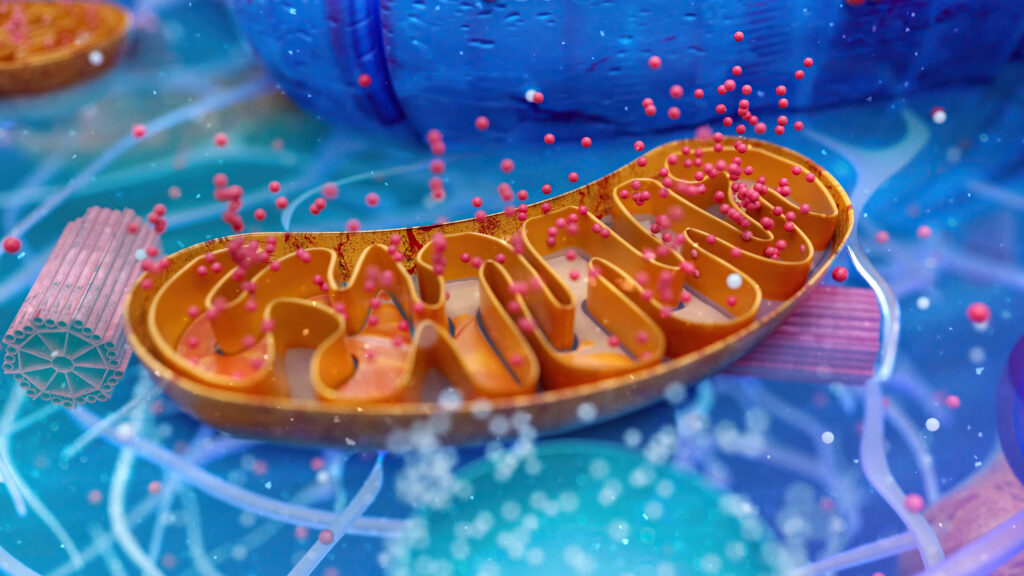
Is the true meaning of "rejuvenation" simply improving the cellular environment?
Looking at all of this, one interesting idea comes to mind.
Perhaps what's needed to create a youthful body isn't to forcibly rejuvenate cells.
Rather,
Move your body appropriately.
Get enough sleep.
Get the necessary nutrients.
Avoid excessive energy intake.
It suppresses chronic inflammation.
Through these daily efforts, we can improve the environment in which the cells reside.
As a result, gene expression and intracellular information networks, including microRNAs, may be kept in a healthier state.
In fact, microRNAs are being studied not only for their role in aging itself, but also for their ability to cross-sectionally regulate multiple biological pathways related to aging, such as inflammation, oxidative stress, metabolism, mitochondria, and autophagy.
That's why microRNAs are attracting attention not only as an indicator of aging, but also as a clue to understanding how lifestyle habits affect cells.
Will future anti-aging change the "messages we send to our cells"?
Up until now, anti-aging treatments have primarily focused on maintaining a youthful appearance.
However, things might be a little different in the future.
It's not just about how many wrinkles you have on your skin,
How old are the cells?
How severe is the inflammation?
Is your metabolism in a youthful state?
To what extent do muscles retain their regenerative capacity?
And what kind of "messages" are the cells sending?
By taking all this information into account, we are approaching an era where we can truly evaluate what constitutes "healthy aging."
MicroRNA research is still in its early stages of development.
We haven't yet figured out what all microRNAs mean. Nor are we at a stage where we can accurately predict future diseases or lifespan through testing.
Nevertheless, microRNAs are very interesting in understanding how our lifestyle habits influence cellular information networks.
Rejuvenation may not be about turning back the hands of a clock.
Through daily exercise, sleep, and diet, we gradually change the messages we send to our cells.
Through this cumulative process, the body's inherent ability to maintain youthfulness is unleashed.
The future of anti-aging may be moving in that direction.
And one day, not just looking at the results of a health checkup,
"What message are your cells sending?"
The time may be coming when we will have to ask this question.








Comment