
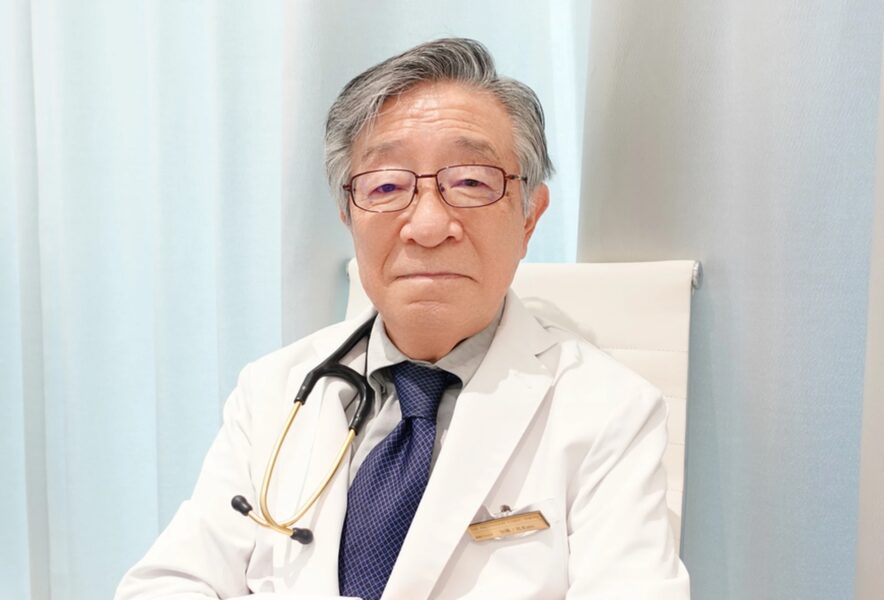
Lung cancer is one of the leading causes of cancer death in Japan, making its early detection and treatment a critical challenge for the medical community. Dr. Harufumi Kato is a globally renowned expert in this field. He has introduced numerous innovative methods in the diagnosis and treatment of lung cancer, saving the lives of many patients. This article will detail Dr. Kato's achievements, particularly his efforts in cancer screening.
[Career History]
Graduated from Tokyo Medical University, completed graduate studies at the same university, studied at the Karolinska Institute in Sweden, former Chief Professor of the First Department of Surgery at Tokyo Medical University, Vice President of Tokyo Medical University, Director of the Clinical Proteome Center at Tokyo Medical University.
He has served as President of the International Society of Cytology, President of the International Society for Lung Cancer, Chairman of the Board of Directors of the International Society for Lung Cancer, President of the International Bronchological Society, Chairman of the Board of Directors of the Japan Medical Society, Chairman of the Board of Directors of the Japanese Society of Clinical Cytology, President of the General Assembly of the Japan Lung Cancer Society, Chairman of the Board of Directors of the Japan Lung Cancer Society, Councilor and Director of the Japan Surgical Society, Councilor and Director of the Japanese Society for Thoracic Surgery, Councilor and Director of the Japanese Society for Respiratory Endoscopy, Delegate of the Japanese Respiratory Society, Councilor of the Japanese Society of Clinical Oncology, Councilor and Director of the Japanese Society for Cancer Therapy, Chairman of the Board of Directors of the Japanese Society for Laser Medicine, President of the International Society for Laser Medicine, President of the International Society for Photodynamics, President of the Japanese Society for Clinical Proteomics, and President of the Japanese Society for Photodynamics, among other positions.
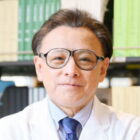
Harufumi Kato Profile
[Public offices]
He has served as an expert for various organizations, including the Science and Technology Agency, the Agency of Industrial Science and Technology of the Ministry of International Trade and Industry, the Ministry of Health and Welfare, the Japan Science Council Research Association, the Ministry of Education, Culture, Sports, Science and Technology, the Japan Medical Association, and the Ministry of Health, Labour and Welfare.
[Awards]
1986 Japanese Society of Clinical Cytology Award, 1997 Japanese Bronchological Society Ikeda Award
1998 International Society of Cytology Goldblatt Award (USA)
1999 International Association for Thoracic Diseases Distinguished Fellow Award (USA)
2005 International Congress of Photodynamics: The “von Tappeiner” Medal (Germany)
2005 International Association for Lung Cancer (IASLC) Merit Award (USA)
2007 Japan Medical Association Meritorious Service Award
2017 Song Eum Prize (South Korea)
2019 International Society for Photodynamics Gold Medal Award (USA)
- Biography and areas of expertise of Professor Harufumi Kato
- Development and dissemination of photodynamic therapy (PDT)
- The importance of early detection and the recommendation of CT screening
- Activities at the Japanese Medical Society and the dissemination of medical information
- Research activities and clinical applications of genetic diagnostics
- Numerous awards and international acclaim
- Contribution to healthcare policy
- Future prospects
- summary
Biography and areas of expertise of Professor Harufumi Kato
Professor Harufumi Kato graduated from Tokyo Medical University and completed his postgraduate studies there. He then studied at the Karolinska Institute in Sweden, where he learned cutting-edge medical technology. After returning to Japan, he held important positions such as Professor and Chairman of the First Department of Surgery at Tokyo Medical University, Vice President, and Director of the Clinical Proteome Center. He currently serves as Professor Emeritus at the same university. Furthermore, he is also the Honorary Director of Niiza Shiki Central General Hospital. He has also held leadership positions in numerous academic societies, including President of the International Lung Cancer Society, Chairman of the Japan Lung Cancer Society, Chairman of the Japanese Society for Laser Medicine, and President of the International Society for Photodynamic Therapy.
Development and dissemination of photodynamic therapy (PDT)
One of Professor Kato's most notable achievements is the development and dissemination of photodynamic therapy (PDT). PDT is a treatment method that selectively destroys cancer cells by administering a photosensitive substance that specifically accumulates in cancer cells and then irradiating them with laser light. This method has revolutionized the treatment of early-stage lung cancer due to its minimal burden on the body and high cure rate. Clinical application of PDT began in 1980, and by October 1995, PDT had been performed on 225 lung cancer cases (276 lesions), demonstrating its effectiveness, including achieving complete remission (CR) in 82.41 TP3T of endoscopically detected early-stage cancer.
Furthermore, Professor Kato has dedicated himself to expanding the indications for PDT, and is advancing its application to other types of cancer, including adenocarcinoma, cervical cancer, esophageal cancer, and gastric cancer. In particular, for refractory esophageal cancer, he developed a new treatment method called the "iTAP method," which combines immunotherapy and PDT. This method is characterized by its strong efficacy in destroying cancer cells from within in a short time, while also being less burdensome on the body.
The importance of early detection and the recommendation of CT screening
Early detection is crucial in the treatment of lung cancer. Dr. Kato strongly recommends the introduction of more accurate CT scans, in addition to conventional chest X-rays and sputum tests. CT scans allow for detailed imaging of the lungs, enabling the early detection of small cancers, with a detection rate approximately 10 times higher than conventional methods. The widespread availability of such highly accurate tests has enabled early detection and treatment, saving the lives of many patients.
Furthermore, Professor Kato is also focusing on the usefulness of sputum cytology and is investigating methods for inducing sputum production. This method allows for testing even in patients who have difficulty producing sputum, contributing to an improved early detection rate of lung cancer.
Activities at the Japanese Medical Society and the dissemination of medical information
Professor Kato serves as the chairman of the Japan Medical Society, a general incorporated association established in 2007. This society was founded with the aim of bridging the information gap caused by rapid changes in medical technology and the medical environment, changes in social structure, and the diversification of public values. It provides information to the public through the internet, explaining various medical issues in an easy-to-understand manner. Professor Kato aims to contribute to national healthcare by providing clear and accessible information on beneficial initiatives and topics from the medical service providers' side.
Research activities and clinical applications of genetic diagnostics
Professor Kato is also actively conducting research on genetic diagnosis of lung cancer. His research on the basics of lung cancer genetic diagnosis using the PCR method and its clinical application has yielded results that contribute to improving early diagnostic techniques.
Numerous awards and international acclaim
Professor Harufumi Kato's achievements are highly regarded both domestically and internationally, and he boasts numerous awards. In 1986, he received the Japanese Society of Clinical Cytology Award, and in 1997, the Ikeda Award from the Japanese Bronchological Society. Furthermore, in 1998, he was awarded the Goldblatt Award from the International Society of Cytology (USA), and in 1999, the Distinguished Fellow Award from the International Society for Thoracic Diseases (USA), demonstrating that his research achievements are recognized internationally.
Furthermore, in 2005, he received "The von Tappeiner Medal" from the International Society for Photodynamics (Germany), and in the same year, the Merit Award from the International Association for Lung Cancer (IASLC) (USA). His long-standing medical research and contributions have been continuously recognized, including the Japan Medical Association Merit Award in 2007, the Song Eum Prize from South Korea in 2017, and the Gold Medal Award from the International Society for Photodynamics (USA) in 2019.
These awards demonstrate Professor Kato's significant influence in the medical field and the global recognition of his groundbreaking research.
Contribution to healthcare policy
Professor Kato has made significant contributions not only to research but also to Japanese healthcare policy. He has served as an expert in numerous government agencies, including the Science and Technology Agency, the Ministry of International Trade and Industry (now the Ministry of Economy, Trade and Industry), the Ministry of Health, Labour and Welfare, the Ministry of Education, Culture, Sports, Science and Technology, the Japan Medical Association, and the Science Council of Japan, contributing to the development of Japan's healthcare system.
In particular, policy recommendations regarding the early detection of lung cancer and efforts to promote cancer screening have played a crucial role in improving the level of medical care in Japan. As a result, more patients are able to detect cancer early and receive appropriate treatment.
Future prospects
Professor Kato continues to serve as the chairman of the Japan Medical Society, dedicating himself to the advancement of medical technology and the promotion of cancer screening. In particular, he is actively involved in improving the accuracy of lung cancer diagnosis using artificial intelligence (AI) and developing new cancer treatments.
Furthermore, they are engaged in awareness campaigns to improve cancer screening rates and are working to spread simpler and more accurate cancer testing technologies, and are expected to continue to play an important role in the medical field in the future.
summary
Professor Harufumi Kato has been at the forefront of lung cancer diagnosis and treatment for many years, leaving behind numerous achievements, including the popularization of photodynamic therapy (PDT), the recommendation of CT screening, and research into cancer gene diagnosis. Furthermore, he continues to contribute to improving the standards of medical care in Japan and around the world through his involvement in medical policy and academic activities.
In this era where the importance of early detection and treatment of lung cancer is being emphasized, Professor Kato's research and contributions to medicine will continue to bring hope to many patients and drive the advancement of medical care.

Comment